Quality Records Breweries Expect From Adjunct Syrup Suppliers
Breweries do not buy adjunct syrup on appearance alone. They buy predictable fermentability, repeatable solids, controlled viscosity, clean logistics, and confidence that every tanker can be traced back through the plant.
For a brewing adjunct syrup manufacturer, quality records are not paperwork after the run. They are part of the product. The stronger the record package, the easier it is for a brewery to approve receiving, troubleshoot fermentation performance, and keep production moving without extra holds.
BrixPilot supports syrup plants as an enzyme supplier for brewing syrup production with a practical focus: stable conversion behavior, dependable dosage handling, and documentation that helps quality, operations, and commercial teams speak the same language.
Why breweries scrutinize syrup quality records
Adjunct syrup enters a brewing process where small shifts can become visible at scale. A tanker that arrives with the wrong fermentability profile, elevated viscosity, or incomplete release documentation can create delays in brewhouse scheduling, cellar performance, and finished beer consistency.
Most brewery quality teams are looking for evidence in five areas:
- The syrup matches the agreed specification.
- The batch can be traced through raw material, enzyme, process, and tanker history.
- The supplier can explain and contain deviations.
- The product is consistent from shipment to shipment.
- Changes are communicated before they affect brewery operations.
Strong records reduce back-and-forth at the receiving dock. They also give the brewery a defensible basis to release material faster.
The core record set breweries expect
1. Certificate of analysis for each shipment
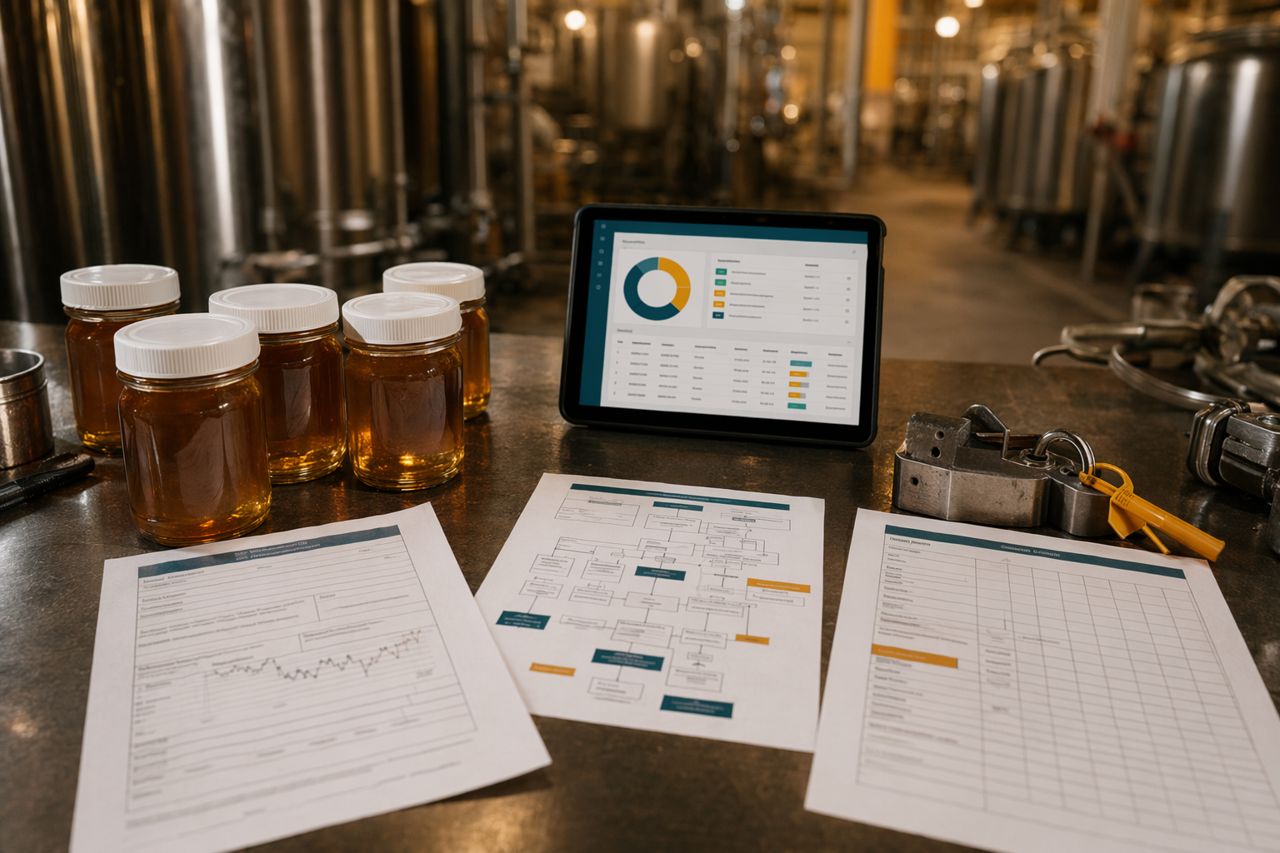
A certificate of analysis should be specific to the shipped lot or tanker, not a generic specification sheet. It should confirm the quality attributes that matter to brewing use.
Typical COA content includes:
- Product name and internal grade code
- Lot, batch, and tanker identifiers
- Brix or solids result
- DE or fermentability indicator, where specified
- Viscosity or flow-relevant measurement, where specified
- pH range confirmation
- Color and appearance statement
- Microbiological release status, where required
- Date of manufacture and shipment
- Authorized quality release signature or digital approval
The COA should align with the commercial specification. If the brewery specifies a narrower fermentability target than your standard grade, the COA should show the agreed target language clearly.
2. Batch genealogy
Batch genealogy shows how the tanker was made. It connects the finished syrup shipment to raw material receipts, process vessels, enzyme lots, filtration records, storage tanks, and loading events.
A brewery may never ask for the full genealogy on every load, but it expects the supplier to produce it quickly during an investigation.
Useful genealogy records include:
- Corn, grain, or starch feedstock lot references
- Liquefaction and saccharification vessel IDs
- Enzyme product and lot references
- In-process hold tank numbers
- Filtration or clarification skid records
- Finished syrup storage tank history
- Tanker loading arm, seal, and compartment details
This is where enzyme documentation matters. If an enzyme lot changes and a fermentability shift appears downstream, quality teams need the ability to review that relationship without guessing.
3. Process control records
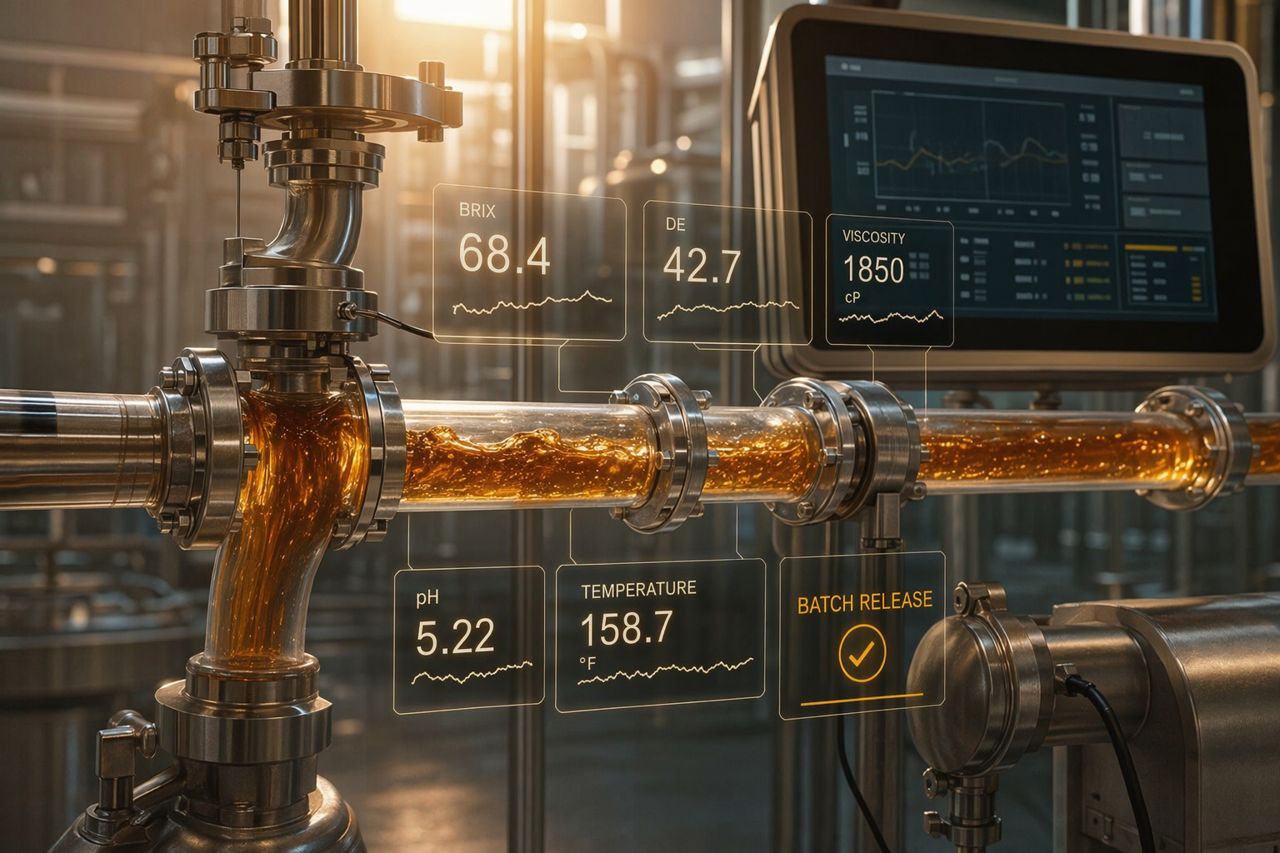
Breweries do not need to see every plant screen. They do need confidence that conversion, temperature control, pH management, residence time, and transfer steps were held within the approved operating window.
Process records should show that the syrup was produced under controlled conditions, including:
- Liquefaction control checks
- Saccharification stage confirmation
- pH and temperature trend acceptance
- Agitation or recirculation status where relevant
- Filtration pressure or flow trend notes
- Hold time and tank transfer records
- Final blend or adjustment approvals
For plant managers, this is not just compliance. Stable process control reduces rework, lowers the risk of off-spec tankers, and protects loading schedules.
4. Enzyme lot traceability and change control
Enzymes are part of the manufacturing system, not background consumables. Breweries expect syrup suppliers to know which enzyme lots were used and to manage enzyme changes with discipline.
Your records should be able to answer:
- Which enzyme products were used in the batch?
- Which supplier lots were used?
- Was the dosage plan approved for this syrup grade?
- Was any substitution made?
- Was a new enzyme lot introduced during the production window?
- Was the brewery notified if the change could affect specification performance?
BrixPilot helps customers structure enzyme programs around dosage reliability and conversion consistency. That means fewer unexplained swings, cleaner troubleshooting, and stronger confidence in recurring brewery supply.
5. Tanker cleaning, loading, and seal records
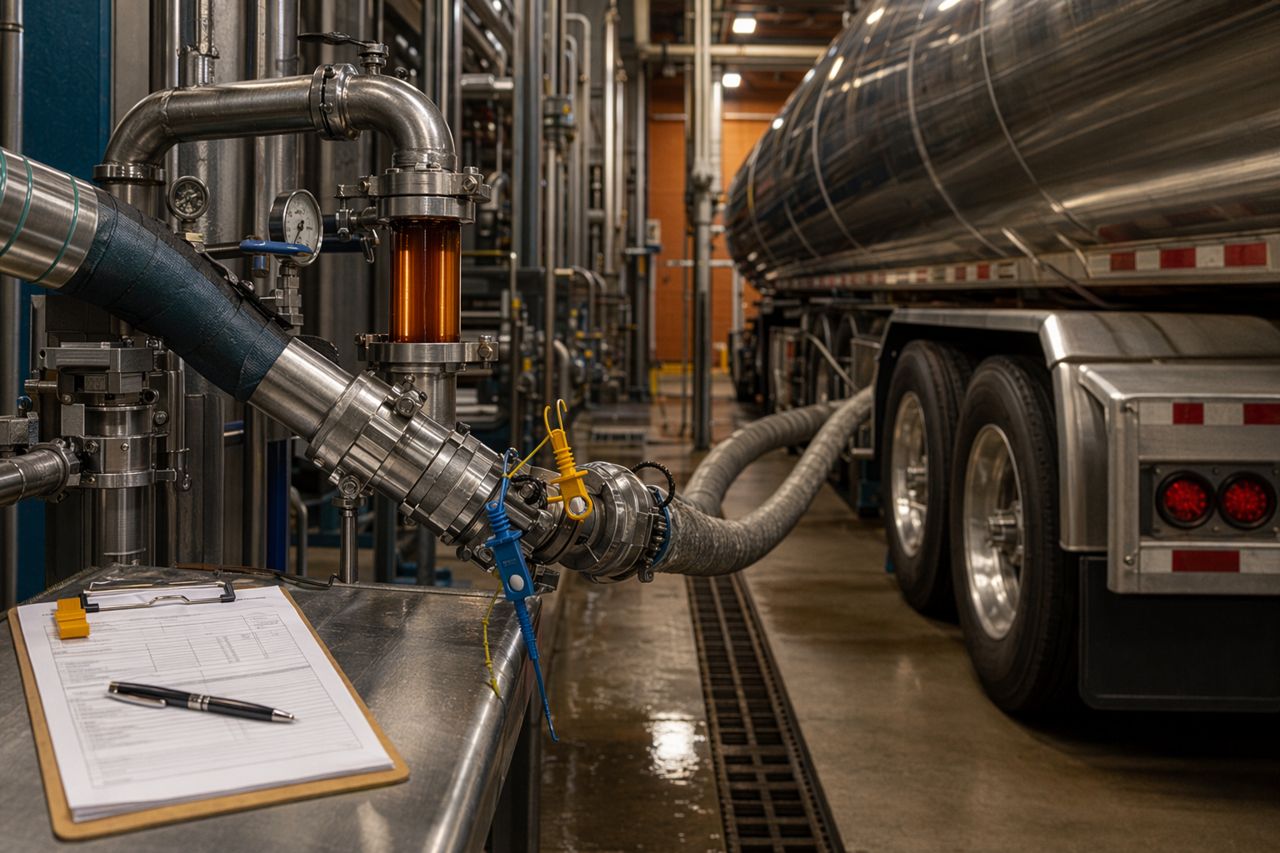
A syrup can be perfectly made and still create a receiving problem if logistics records are incomplete. Breweries want confidence that the tanker was suitable, clean, correctly loaded, and sealed.
Key shipment records include:
- Previous cargo verification or approved wash documentation
- Cleaning certificate where required
- Tanker inspection checklist
- Load temperature or handling condition record
- Compartment and seal numbers
- Net weight or volume documentation
- Loading time and release approval
- Bill of lading alignment with COA and lot references
When receiving teams can match COA, seal, tanker, and lot data without delay, trucks move faster and fewer loads are placed on hold.
Records that strengthen brewery supplier approval
Beyond the shipment-level file, breweries often evaluate the supplier’s quality system. The most credible adjunct syrup manufacturers maintain a ready package for audits and vendor qualification.
Specification control
Keep current specifications under document control. Brewery-facing specs should define the quality attributes that affect fermentability, viscosity, pumping, storage, and brewhouse use. Historical versions should be retained so changes can be reviewed by date.
Deviation and corrective action history
Breweries understand that industrial production has variation. What they expect is a disciplined response. Deviation records should show what happened, what product was affected, what containment action was taken, and what was changed to prevent recurrence.
Retention sample program
Retention samples support investigations. They allow the supplier to compare a questioned shipment with production records, tanker data, and receiving results. The program should define sample identity, storage conditions, retention duration, and chain of custody.
Food safety and regulatory documentation
Depending on market and brewery requirements, suppliers may need to maintain food safety certifications, allergen statements, ingredient declarations, GMO status documentation, country-of-origin information, and compliance letters. These documents should be current and easy to retrieve.
Supplier qualification records
Adjunct syrup quality depends on upstream suppliers. Breweries may ask how starch, process aids, packaging, tanker carriers, and enzymes are qualified. A clear supplier approval process reduces risk and supports faster customer audits.
Common gaps that slow brewery approval
Many syrup plants already run solid operations but lose time because records are fragmented. The most common gaps are practical, not philosophical.
Watch for:
- COA values that do not match the current customer specification
- Tanker seal numbers recorded in one system but not another
- Enzyme lot numbers captured on paper but not linked to finished batch records
- Process deviations closed without root-cause notes
- Retention samples labeled with internal codes the customer cannot interpret
- Change notices sent after the brewery has already received affected product
- Inconsistent terminology between production, QA, sales, and shipping documents
These gaps create friction. They also make a good plant look less controlled than it is.
How enzyme program discipline improves records
For adjunct syrup manufacturers, enzyme performance shows up in plant-floor results: conversion profile, viscosity behavior, filtration stability, and shipment consistency. When the enzyme program is controlled, the quality record package becomes easier to defend.
BrixPilot focuses on enzyme supply in terms that matter to syrup operations:
- Reliable lot-to-lot performance for consistent fermentability targets
- Practical dosing guidance aligned with plant equipment and syrup grades
- Documentation that supports ingredient traceability and customer audits
- Technical support for conversion stability and viscosity control
- Change communication that helps avoid surprise brewery issues
The goal is not complexity. The goal is repeatable production with records that are clean enough for customer quality teams and useful enough for plant managers.
A practical pre-shipment record checklist
Before a tanker leaves the site, the quality and shipping teams should be able to confirm:
- The COA is complete and matches the customer specification.
- The finished lot is linked to raw material, process, enzyme, and storage records.
- In-process checks were within the approved production window.
- Any deviation has been reviewed and dispositioned.
- Retention samples are identified and stored.
- Tanker cleaning and inspection records are complete.
- Seal numbers match shipping documents.
- Customer-specific documentation is attached or available.
- Any relevant change notice has been issued before shipment.
A checklist like this protects uptime on both sides of the supply relationship.
What breweries really want
Breweries want adjunct syrup that runs predictably. They want tankers that unload cleanly, specifications that hold steady, and records that make release decisions straightforward.
For the syrup manufacturer, better quality records translate into fewer dock holds, fewer emergency investigations, stronger customer confidence, and a more defensible supply position.
If your plant is tightening fermentability control, improving viscosity consistency, or preparing for brewery customer audits, BrixPilot can help align the enzyme side of the process with the record package your buyers expect.
Request a quote
Planning a new adjunct syrup grade, reviewing enzyme supply, or standardizing documentation for brewery customers? Use the on-site request a quote form and tell us about your substrate, process flow, target syrup profile, and current production constraints. BrixPilot will respond with a practical enzyme supply recommendation for your plant.